All Categories
Featured
Table of Contents
Our vendor-neutral approach makes sure that your cloud platform selection lines up with your architecture, budget plan, compliance, and future goals. Criteria AWS Azure Google Cloud Best For Broad-scale business needs Microsoft-centric services AI/ML and data-heavy workloads Strengths Largest service range & global protection Strong hybrid cloud & MS tool combination Leading in Kubernetes & analytics AI/ML SageMaker, Rekognition Azure ML, Cognitive Solutions Vertex AI, BigQuery ML Rates Pay-as-you-go, scheduled, area Hybrid benefits, enterprise deals Sustained-use discount rates Dev Tools AWS Dev Tools, CLI, SDKs Azure DevOps, GitHub Cloud Build, Functions, SDK Hybrid Assistance Outposts, VMware on AWS Azure Arc, Stack Anthos for multi-cloud Security Advanced IAM, compliance-ready Identity-focused security Zero-trust by default Cloud change can cause cost savings, however only with the best controls.
Cloud Change Strategy What Does It Do? Usage-Based Billing Designs Use on-demand prices to align expenses with real-time usage.
CI/CD Pipeline Efficiency Automate screening and deployment to lower environment waste and idle expenses. Reserved Instances Lock in long-lasting workloads at reduced rates for predictable cost savings.
Boosting Modernization With Cloud-Native Digital Models
The idea of cloud computing, or the definition of cloud, suggests modern IT innovation used to process and store information not on computer system disks or local servers but in virtual space, developing a cloud environment. Cloud computing works by moving the provision of IT services (information, software application or calculating power) to external servers.
In today's rapidly progressing technological landscape, organizations are constantly seeking innovative solutions to streamline their operations, enhance performance, and get an one-upmanship. One of the most pivotal improvements over the last few years has actually been the adoption of cloud services. This paradigm shift has reinvented the method companies handle their data, applications, and resources.
Standard on-premise services typically struggle to stay up to date with the ever-changing demands of businesses. Cloud solutions, on the other hand, offer exceptional scalability. Whether your company experiences an abrupt rise in need or needs extra resources for a brand-new task, cloud services can quickly and perfectly adapt to your needs.
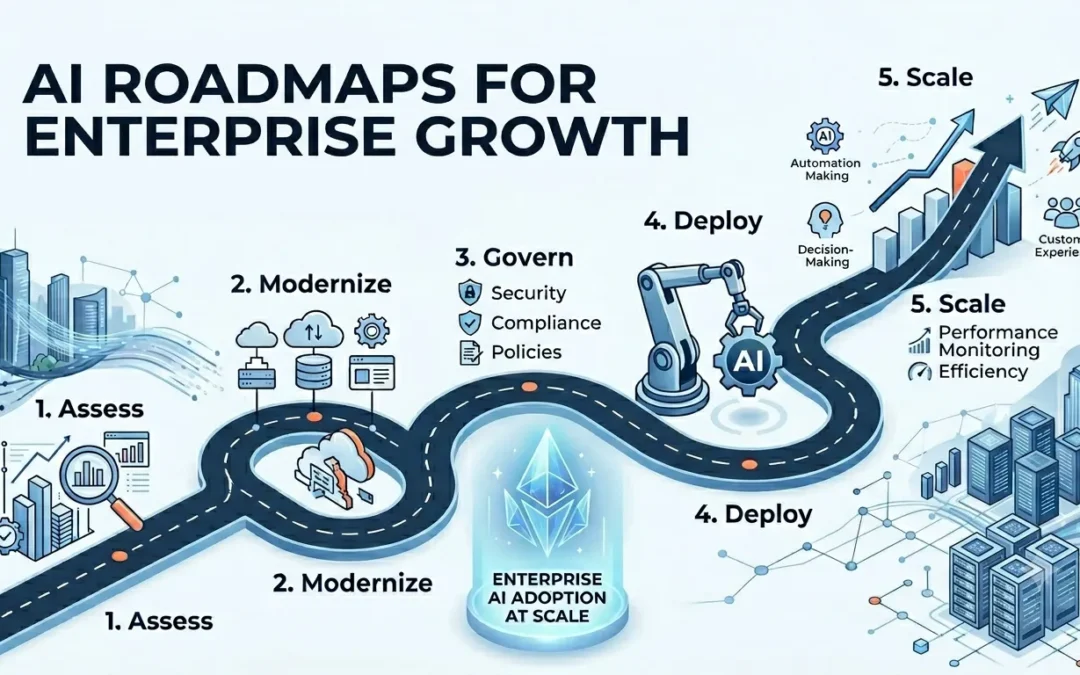
Traditional Systems Versus Modern AI-Cloud Paradigms
Accepting cloud solutions gets rid of the need for considerable in advance financial investments in physical hardware and infrastructure. Additionally, you can avoid the continuous expenses of upkeep, upgrades, and security that include on-premise solutions. Cloud service providers generally provide a pay-as-you-go design, permitting you to enhance your expenditures and designate resources where they are required most.
Credible cloud suppliers invest heavily in modern security procedures, file encryption innovations, and compliance accreditations. These procedures ensure that your information is safeguarded versus cyber dangers, unapproved gain access to, and possible disasters. The modern organization landscape needs seamless partnership among groups, regardless of their physical place. Cloud options make it possible for real-time cooperation on documents, projects, and applications from anywhere with an internet connection.
In case of a natural catastrophe, hardware failure, or other unexpected scenarios, cloud options offer robust catastrophe healing and organization continuity techniques. With data saved in geographically redundant data centers, you can quickly recover crucial information and applications, guaranteeing very little downtime and interruption to your operations. Cloud solutions supply a fertile ground for innovation.
Why Visibility is the Core of 2026 Security BlueprintsConclusion The adoption of cloud services represents an essential moment in the evolution of contemporary business operations. By utilizing the power of the cloud, businesses can future-proof their operations and embark on a transformative journey towards sustainable growth and success.
Driving the Synergy of AI and Cloud Architecture
Attain unprecedented clarity with Hexaware's Amaze, an AI-fueled, automation-rich platform. It diligently catalogs your IT facilities, demystifying complex application relationships and dependences. The result? An unrivaled roadmap for migration strategies, customized to your particular needs. Partner with Hexaware for cloud migration that lines up with your budget plan without jeopardizing efficacy. Through strategic cloud-native applications, custom resource changes, and intelligent auto-scaling, we provide a cost-efficient roadmap for your cloud journey.
Raise your modernization journey with Hexaware's unparalleled proficiency in PaaS, CaaS, and FaaS environments. We direct you through re-platforming, refactoring, and rearchitecting, ensuring you extract maximum value from your cloud change. Hexaware alleviates your modernization anxieties with automation-backed, framework-driven options, reducing prospective risks and ensuring an effective modernization journey, causing concrete TCO savings.
The pandemic brought about a sea modification in the method companies ran. The work-from-anywhere (WFA) experiment required by the pandemic offered unmatched cost savings and continues to do so. Digital Marketplaces have actually become the standard, and online customer touchpoints have actually replaced conventional channels throughout industry verticals. Over the last number of years, it has actually ended up being evident that enterprises that adjust quickly to changing market conditions exceed their peers significantly.
Digitalization goes one action even more and focuses on enhancing organization processes using digital workflows. It focuses on improving the essential performance signs (KPIs) per the tactical objectives of a business. Digital Transformation includes both digitization and digitalization together with company and people elements. It covers whatever from executing enterprise applications and creating digital work models to constructing brand-new services for customers and workers.
How to Properly Optimize Your AI Adoption Journey
Conventional IT jobs require heavy capital investments. Setting-up on-premise facilities also requires employing IT resources which is an extra functional expenditure. Many business still consider digital investments as operational costs instead of transformative initiatives. Because it is challenging to forecast ROI for large digital jobs, organization leaders may be averse to starting.
Transformational tasks might need changes in the organization models, work environment characteristics, and operating procedures. An understanding that potential IT services might not provide the essential flexibility is among the factors digital change efforts fail to take off. Cloud technologies are becoming the bedrock of change methods for modern companies.
Cloud platforms are usually readily available on a monthly or yearly per-user membership basis. The cloud service provider handles the servers, network components, and application updates in the background.
IT teams can immediately increase or decrease storage and computing capacities based upon business requirements. It allows organizations to attempt proof-of-concept (POC) or create new applications without hardware restrictions or a slow procurement procedure. Cloud-based software application apps provide out-of-the-box performances aligned with market best practices. You can also configure and tailor these workflows for policies and designs particular to your company.
Driving the Convergence of AI and Cloud Architecture
Business users can typically deal with these on their own. Per a recent Deloitte Insights study of more than 500 IT leaders, 58% of respondents ranked information security as the No. 1 or 2 factor for relocating to the cloud. Modern cloud options use the current security protocols at every layer, from hardware and operating systems to application and user levels.

Latest Posts
Navigating the 2026 Landscape of Digital Convergence
Navigating the AI-Cloud Convergence in 2026
Transforming Cloud Platforms for the Digital Age